Monday, April 11, 2011

What foods are in the grain food group?

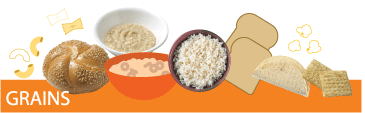
Any food made from wheat, rice, oats, cornmeal, barley or another cereal grain is a grain product. Bread, pasta, oatmeal, breakfast cereals, tortillas, and grits are examples of grain products.

Grains are divided into 2 subgroups, whole grains and refined grains.

Whole grains contain the entire grain kernel -- the bran, germ, and endosperm. Examples include:
•whole-wheat flour
•bulgur (cracked wheat)
•oatmeal
•whole cornmeal
•brown rice

Refined grains have been milled, a process that removes the bran and germ. This is done to give grains a finer texture and improve their shelf life, but it also removes dietary fiber, iron, and many B vitamins. Some examples of refined grain products are:
•white flour
•degermed cornmeal
•white bread
•white rice

Most refined grains are enriched. This means certain B vitamins (thiamin, riboflavin, niacin, folic acid) and iron are added back after processing. Fiber is not added back to enriched grains. Check the ingredient list on refined grain products to make sure that the word “enriched” is included in the grain name. Some food products are made from mixtures of whole grains and refined grains.

Health benefits

•Consuming foods rich in fiber, such as whole grains, as part of a healthy diet, reduces the risk of coronary heart disease.
•Consuming foods rich in fiber, such as whole grains, as part of a healthy diet, may reduce constipation.
•Eating at least 3 ounce equivalents a day of whole grains may help with weight management.
•Eating grains fortified with folate before and during pregnancy helps prevent neural tube defects during fetal development.


Check out this site to see how much of this food group you should be eating a day!


*From mypyramid.gov
Visit http://www.mypyramid.gov/pyramid/grains.html# to learn more.

Mix up your choice WITHIN each food group

Focus on fruits. Eat a variety of fruits – whether fresh, frozen, canned or dried – rather than fruit juice for most of your fruit choices. Try melons such as cantaloupe, berries such as blueberries, and citrus fruit such as grapefruit. Teen girls need 2 cups of fruits each day.

Vary your veggies. Eat more dark green veggies, such as broccoli, kale, and other dark leafy greens; orange veggies, such as carrots, sweet potatoes, pumpkin, and winter squash; and beans and peas, such as pinto beans, kidney beans, black beans, garbanzo beans, split peas and lentils. Teen girls need 2½ cups of vegetables each day.

Get your calcium-rich foods. Teen girls need 1,300 milligrams of calcium every day, which equals 130% of the DV (Daily Value) of the 1,000 milligrams that is recommended for adults. This means that teen girls need 30% more calcium than adults need. To get 1,300 milligrams each day, drink and eat a variety of foods that are high in calcium, such as fat-free or low-fat milk, fat-free yogurt, American cheese, ricotta cheese, and fruit yogurt and consume the recommended amounts from the other food groups. It would take 3 cups of milk to get 1,300 mg of calcium. Learn why calcium is important to bone health.

Make half your grains whole. Of the about 6 ounce-equivalents of grains teen girls need every day, at least 3 should be whole-grain cereals, breads, crackers, rice, or pasta. One ounce-equivalent is about 1 slice of bread, 1 cup of breakfast cereal, or ¼ cup of cooked rice or pasta. Look to see that grains such as wheat, rice, oats, or corn are called "whole" in the list of ingredients. Bread that is just called "wheat" bread is not the same as "whole wheat bread." Look for "whole wheat" to know it is the healthiest option.

Go lean with protein. Choose lean meats and poultry that are baked, broiled or grilled. And vary your protein choices by also eating more fish, beans, peas, nuts, and seeds. Teen girls need about 5½ ounces of lean protein each day. A 2-3 ounce serving of meat, poultry, or fish is equal to the size of a deck of cards.

Know the limits on fats, salt, and sugars. Read the Nutrition Facts label on foods. Look for foods low in saturated fats and trans fats. Choose foods and drinks with little salt (sodium) and/or added sugars (caloric sweeteners).

*I found this on www.mypyramid.gov

Do you know how to read the MyPyramid food guide?


The colored sections stand for the food groups and how much you need from each group. Orange is much wider than yellow because you need plenty of grains each day, but should limit how much oil/fat you have. The reason why all these colors are there is because you need to choose a variety of foods from each group. Don’t forget about red just because you love purple foods! Finally, the figure going up the steps is a reminder to get regular exercise.

Orange = Grains
Green = Vegetables
Red = Fruits
Yellow = Oils and fats
Blue = Dairy
Purple = Meats, beans, fish, poultry

Recipes Teens Will Love!

Stacked Summer Salad
1 red pepper, in strips
1 yellow pepper, in strips
3 medium tomatoes, diced
2 cups broccoli flowerettes, lightly steamed
1 cup baby carrots, lightly steamed
1½ cups red onion, diced
1 cup chickpeas or navy beans, cooked
1 cup Greek olives
1 cup Feta cheese
¾ cup extra virgin olive oil
½ cup apple cider vinegar
2 teaspoons Dijon mustard
2 teaspoons parsley, minced
2 teaspoons cilantro, minced
2 cloves garlic, minced
1 teaspoon each sea salt and pepper

In large glass salad bowl, layer pepper strips, broccoli, carrots, onion, beans, olives, Feta and tomatoes. Blend together olive oil, vinegar, Dijon mustard, parley, cilantro, garlic, salt and pepper. Pour dressing over salad and refrigerate for 24 hours. Serves 6.

Mark’s Hummus
1 tablespoon tahini (sesame seed paste)
¼ cup extra virgin olive oil
2 cloves garlic, minced
2 cups chickpeas, cooked
¼ cup reserved chickpea liquid
1 tablespoon lemon juice
1 teaspoon cumin
¼ cup parsley

Place tahini, olive oil, and garlic in food processor. Process for 1-2 minutes. Add chickpeas, reserved chickpea cooking liquid and lemon juice; process until chickpeas are smooth. Add cumin and parsley, process for an additional minute. Serve with vegetable dippers and with good quality pita bread or crackers (i.e. whole grains, no refined sugar). Makes 2¾ cups.

LIKE my page on Facebook!

Learn more about Adolescent Nutrition and MyPyramid on my facebook page. Search: Making MyPyramid Work for You - Jenna !

Charolette Lawson's Healthy Eating Tips : How to Teach Teenagers to Eat Healthy

To teach teens to eat healthy, it's important that you offer those healthy foods at home and enjoy eating healthy with them. Help your teens maintain healthy eating habits with tips from a health promotion specialist in this free video on teenage eating habits.Check out this quick video clip to learn more!

Dr. Kyle James, ETMC First Physician, discusses the importance of proper teen nutrition.

The choices you make in your adolescence may have lasting health effects. Watch this video of Dr. Kyle James, ETMC First Physician, has he discusses the importance of nutrition for adolescents.